…no flowers, no long embrace, none of that warm look a mother recognizes instantly. They sat at the living room table as if they were attending a business meeting. I served water and waited.
Javier cleared his throat. “Mom… at your age it’s important to have everything in order.” Lucía nodded, too serious. Andrés stared at his phone, avoiding me. I tried to joke: “In order? All I have is an old house and a set of dishes with history.” Lucía smiled, but it was a lifeless smile. Then Javier said what he had come to ask: “Have you made your will yet?”
I felt a stab in my chest—not from illness, but from disappointment. “Is that what brings you here today?” I asked. Lucía took my hand for just a second, like a rehearsed gesture. “Mom, don’t take it that way… we just want to be prepared.” The phrase fell like a knife wrapped in gift paper. Prepared. For my absence. To divide things. To close my life into a document.
I didn’t respond. I stood up, turned off the oven, and put the cake in the fridge. They kept talking: about taxes, about “avoiding complications,” about “what’s best for you.” I listened as if hearing rain from indoors—distant, frozen. When they finally left, I sat in the dark with the clock marking each second like a verdict.
That night I didn’t sleep. At seven in the morning, I put on my best blazer—the purple one that makes me feel strong—and called my lawyer, Marina Soler. “I want to do it today,” I told her. Marina was silent for a moment. “Are you sure, Isabel?” I looked around the house: the wall with photographs, the hallway with height marks, the living room where I had been left alone the night before. “More than ever.”
At her office, as the pen brushed the paper, Marina repeated, “Once you sign, there’s no turning back.” I nodded without trembling. And then I signed my name, transferring ownership of my house… without telling anyone.
PART 2
It wasn’t an impulse, even if it seemed like one. It was a decision built on years of silence. My husband died young, and I kept this house afloat with two jobs, double shifts, nights of exhaustion no one saw. My children grew up here and left without looking back. Every call from me was answered with, “I’ll call you later, Mom.” Every Christmas became a quick visit. Even so, I kept believing that love meant enduring and waiting.
Marina explained my options: donation, sale, life usufruct. I chose the clearest and least disputable one. I transferred the house to a local foundation that helps elderly women in vulnerable situations, with one legal condition: I would retain the right to live wherever I wished, but the property would no longer be an inheritance to fight over. I moved into a bright, small apartment near the sea, paid for with my savings. It wasn’t an escape; it was a restart.
For two weeks, I said nothing. Not out of revenge, but for peace. I cleared my mind as if opening windows. I walked in the mornings, reread novels, rekindled friendships. I felt strangely light. Until a neighbor from my old area called me. “Isabel, have you seen what they’re saying on TV?”
Someone from the foundation had shared the story—without intimate details, but enough: “70-year-old woman transfers her house after family pressure over her will.” The tone was human, almost exemplary. But a neighborhood is a loudspeaker. In less than twenty-four hours, my name was circulating. And with it, the question everyone repeated: “What did her children do?”
My phone rang. Javier first. I didn’t answer. Then Lucía, her voice trembling in a message: “Mom, tell me it’s not true. Tell me you didn’t do this.” Andrés sent a short audio: “How could you leave us like this?” The word “leave” hit me, as if I had taken something that was already theirs. I held the phone tightly and breathed. Marina had warned me: “When people feel they’re losing control, they react with anger.”
That same afternoon, I received calls from unknown numbers. Journalists. Curious neighbors. I only spoke with the foundation’s director, Carmen Vidal, to ask for discretion. “We’re not looking for scandal,” she said, “but your gesture inspired others.” I hung up with a knot in my throat—not from sadness, but from a new clarity: my life was not loot.



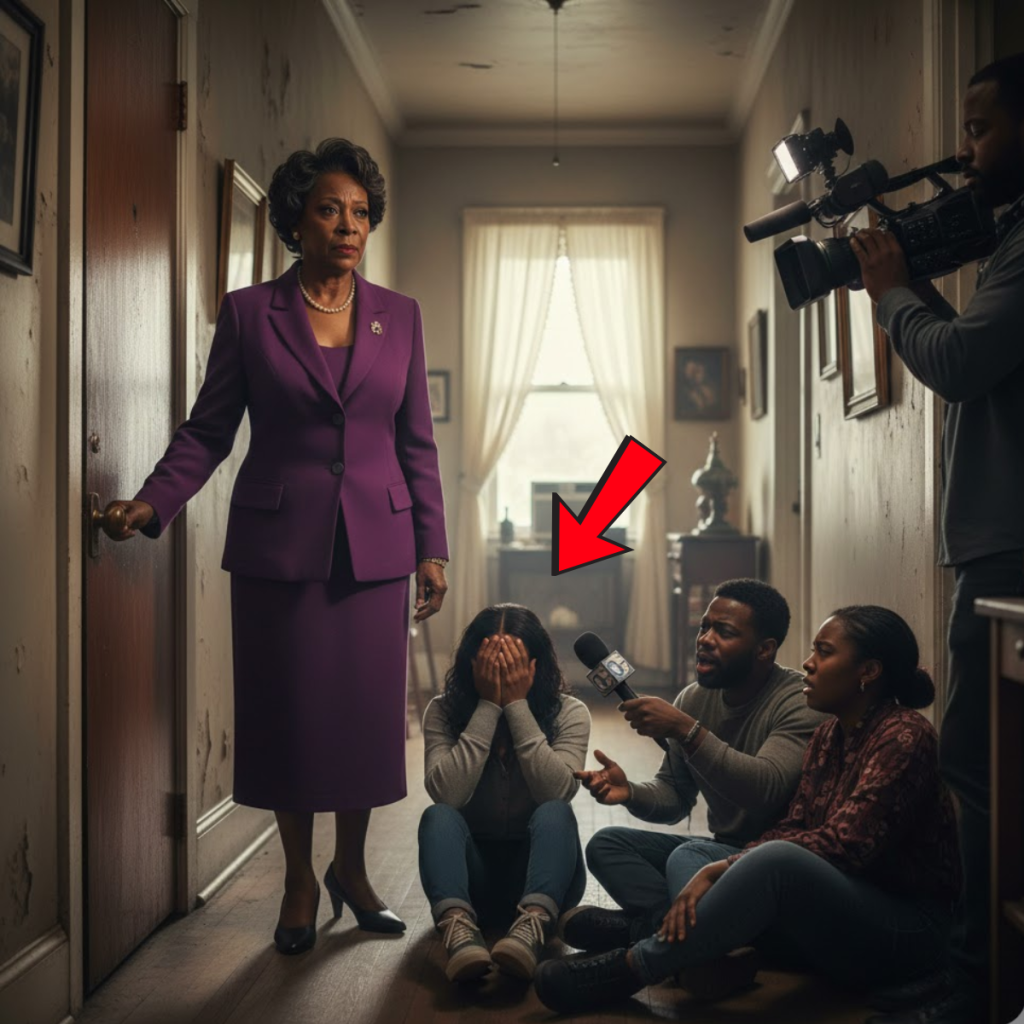
A few days later, while watering a plant on my apartment balcony, I heard loud knocking at the building’s hallway door. Urgent, panicked knocking. I looked through the peephole and saw my three children—disheveled, with dark circles under their eyes, breathing fast. Lucía was crying. Javier’s jaw was tight. Andrés looked around as if afraid someone was recording them.
And then I heard a voice behind them: “Isabel Ríos? I’m from the local TV station. Can we talk?”
PART 3
I opened the door just enough to let air in, not guilt. My children rushed forward with a mix of anger and fear. “Mom, what have you done?” Javier said, trying to sound reasonable. Lucía grabbed my arm. “Tell me this is a misunderstanding.” Andrés, more direct, blurted out, “Did you leave us with nothing?”
That sentence was the real birthday gift—the confirmation of what I had felt. I leaned against the doorframe and spoke slowly, without shouting, because for the first time I was listening to myself. “I didn’t leave you with nothing. I left you without my house. That’s not the same.” Javier tried to argue. “But it’s what belongs to us.” I looked at him steadily. “Belongs to you? For asking about the will before asking about my health? For coming to my birthday like it was a notary’s office?”
The journalist waited at the end of the hallway, microphone in hand, sensing conflict. I raised my hand calmly and said, “Not today.” She insisted, “People want to understand your decision.” I replied, “People can understand it without invading my doorway.” Carmen, the foundation director, had told me something that stayed with me: “Dignity is not negotiable.” That sentence held me up.
Lucía lowered her gaze. “Mom, we were scared,” she whispered. And finally something human appeared—not just calculation. “Scared of what?” I asked. “Of losing me… or of losing what you thought was yours?” The silence was heavy. Andrés swallowed. Javier clenched his fists. No one answered.
I explained plainly: “The house is already assigned. I’m fine, I’m alive, and I made a legal, conscious decision. If you want to be prepared, prepare yourselves for something harder: to respect me.” Lucía cried harder. “We didn’t see it that way.” I nodded. “Because you didn’t look.”
I didn’t throw them out. I asked for something simple and enormous: “If you want to return to my life, start by coming without an agenda, without papers in your head. Come ask me how I am. Come have coffee, not measure walls.” For the first time, Javier lowered his voice. “Can we talk, without cameras?” I looked at the journalist, still waiting, and closed the door completely. Then I opened it again—only for my children. “Yes,” I said, “but on one condition: next time it’s my birthday, you bring flowers.”
We talked for hours. It wasn’t magical or perfect—it was real: awkward apologies, uncomfortable truths, tears and silences. In the end, they didn’t recover a house; they recovered, if they earned the right, a mother. And I recovered something I thought I had lost: my place in my own story.
If this story stirred something inside you, tell me: what would you have done in my place? Would you have signed too, or given another chance first? I’m reading your comments—because sometimes a single opinion can open someone’s eyes while there’s still time.