In early 2015, life felt like a dream come true. We were newly engaged, excited about our future together, and just weeks away from our wedding. To add to our joy, we found out we were expecting our first child together, blending our families. Everything seemed perfect. We were already familiar with the early pregnancy routine, having experienced the usual ultrasounds and checkups with ease, so when we went for our 20-week anatomy scan, we never expected anything to go wrong.
But as soon as the ultrasound tech became unusually quiet, I sensed something was off. She kept taking measurements, not saying much, and finally left the room. When she returned, she was with our high-risk OB, and that’s when the earth shifted beneath our feet. “Your baby is sick,” the doctor said. “Your baby has multiple issues, the first of which is a heart defect called Tetralogy of Fallot.” I could barely process the words. He continued, “There are also brain abnormalities that we need to investigate further, and we’re not sure whether this is fatal.”
My heart sank. How could this be happening? We had no family history of congenital heart disease, no indication anything was wrong. We were offered genetic testing, and the fear began to set in. What if this was a sign of something even more severe? What if our child wouldn’t survive? The uncertainty weighed heavily on us, but we had to keep moving forward.
A few days later, the genetic testing results confirmed our worst fear: our baby had a condition called Spina Bifida. The news hit us like a ton of bricks. The doctors explained that our baby had an opening in her spine, exposing the spinal cord and nerves to the damaging effects of amniotic fluid. The severity was still unknown, but the doctors warned us of potential lifelong challenges: hydrocephalus, paralysis, lack of bladder and bowel control, intellectual deficits, and the possibility of needing surgeries after birth.
Despite the overwhelming news, we decided to hold onto hope. We named our baby girl Annalise Nicole, after my late father, who always loved the name, and her middle name, Nicole, for my best friend. We knew this little girl was going to be a fighter, and we were determined to give her the best life possible, no matter what.
The following months were filled with more tests and visits to specialists. We learned that Annalise’s condition was severe and that she would need to be transferred to Philadelphia for specialized care at CHOP (Children’s Hospital of Philadelphia). Despite the unknowns, we kept holding onto the hope that Annalise could overcome whatever came her way. But the constant talk of termination, offered by our doctors at each appointment, made it incredibly difficult to stay positive.
We were repeatedly asked to consider ending the pregnancy, given the uncertain future. But we could never even entertain that thought. Our baby was wanted and loved, and we were going to fight for her, no matter what.
Then, we were presented with an option: fetal surgery. The surgery could potentially close the opening in Annalise’s back while she was still in the womb, improving her chances for better leg function, bladder and bowel control, and reducing the risk of brain damage. The catch? The surgery had very strict qualifications, including a BMI requirement that I unfortunately did not meet. I was devastated.
May you like
Iron Bowl Saturday and the Legacy of Walt Gary: A Superfan Who Never Stopped Believing.T225
Sasha’s Fight: A 13-Year-Old’s Unwavering Courage Against Cancer.T481
Madison: A Brave Little Fighter Who Overcame Heart Defects and Lung Struggles.T737
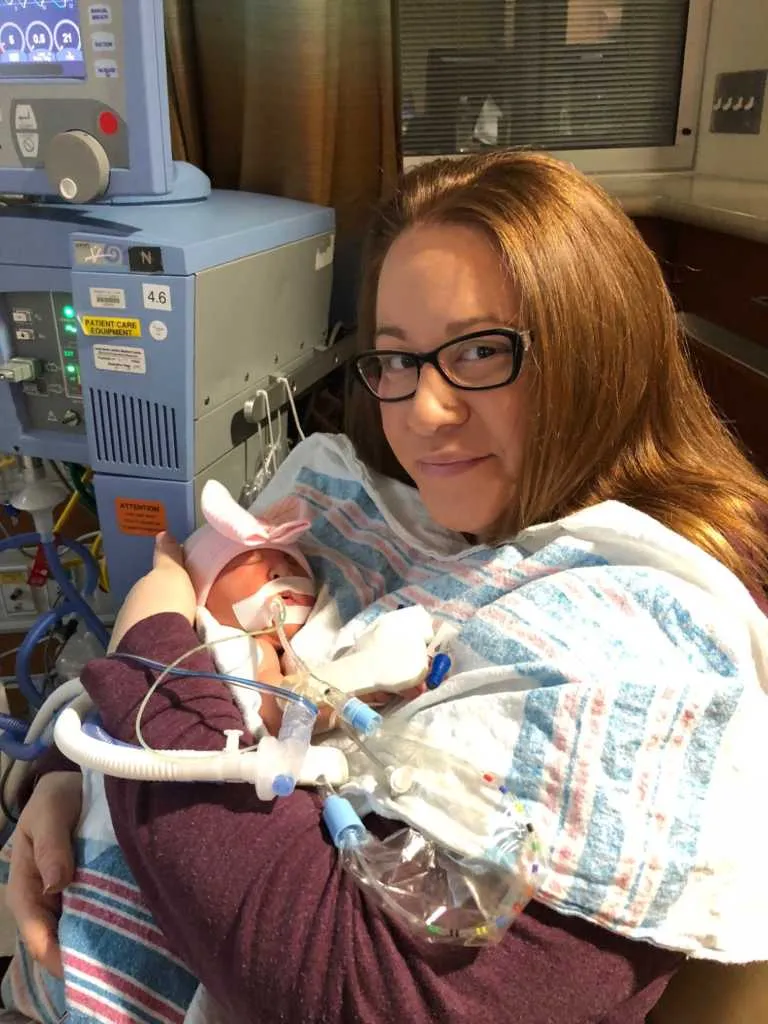
I felt like I was being told I was too fat to save my baby. How could this be happening? Was it my fault? I blamed myself for a long time, wondering if there was something I could have done differently. The guilt was overwhelming, but I knew deep down I had to keep pushing forward.
We decided to continue our care at CHOP, knowing it was the best place for Annalise. We made the long drive from Long Island to Philadelphia at least once a month, going through checkups, tests, and evaluations. Each time, the doctors continued to bring up termination, but we made it clear that it was not an option for us. Every time they asked, we said no, and that was one of the hardest things to do—being constantly reminded that we were facing an incredibly difficult road ahead.
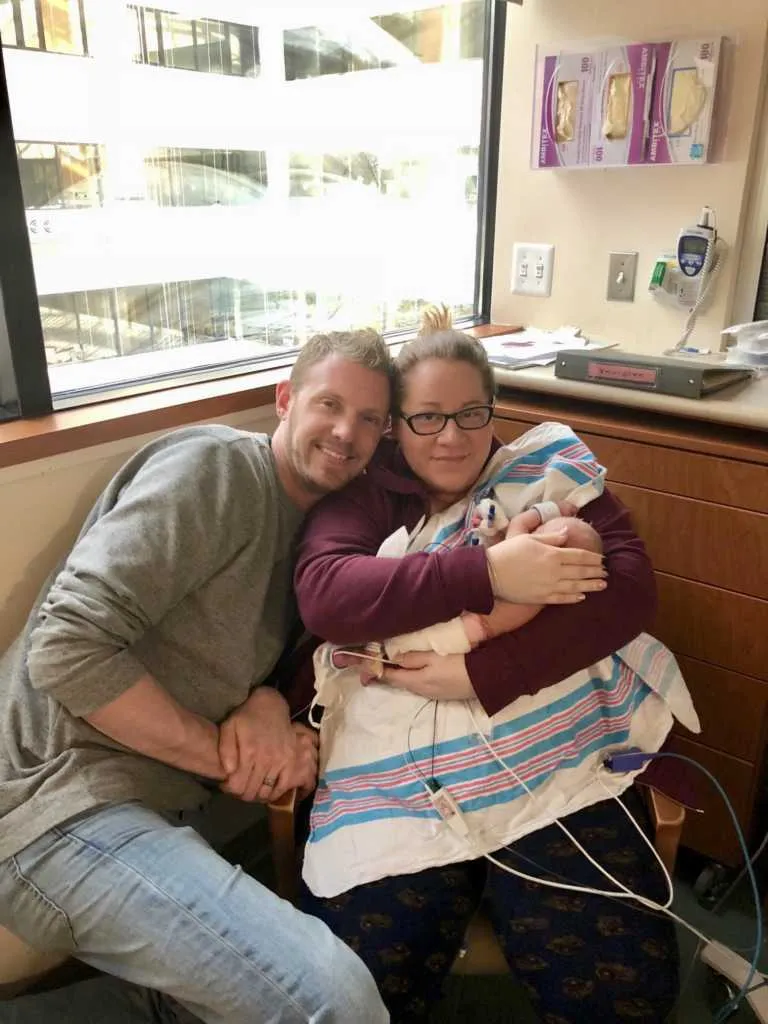
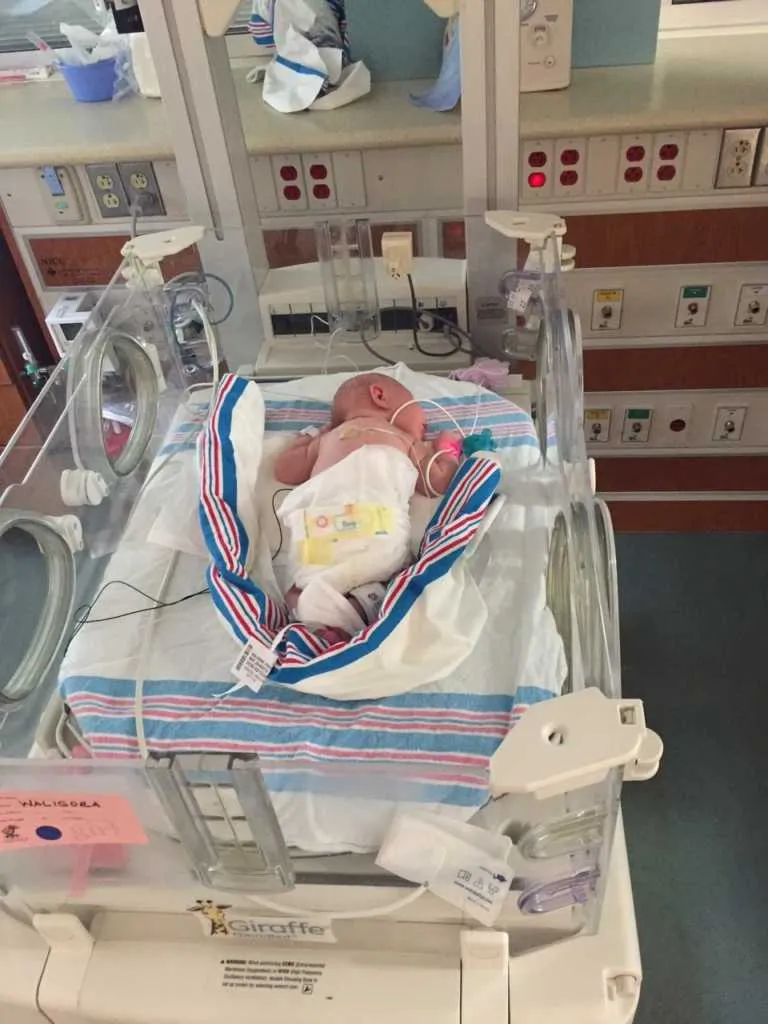
The weeks and months flew by, and before we knew it, it was time for Annalise to be born. I went into labor a little early, and on the day of her birth, we had the support of an incredible medical team. Annalise was born via c-section, and we were prepared for a long journey. The doctors quickly took her to assess her spinal cord and address the issues we knew were coming. We couldn’t hold her for the first few days, as she needed immediate medical attention to stabilize her condition.
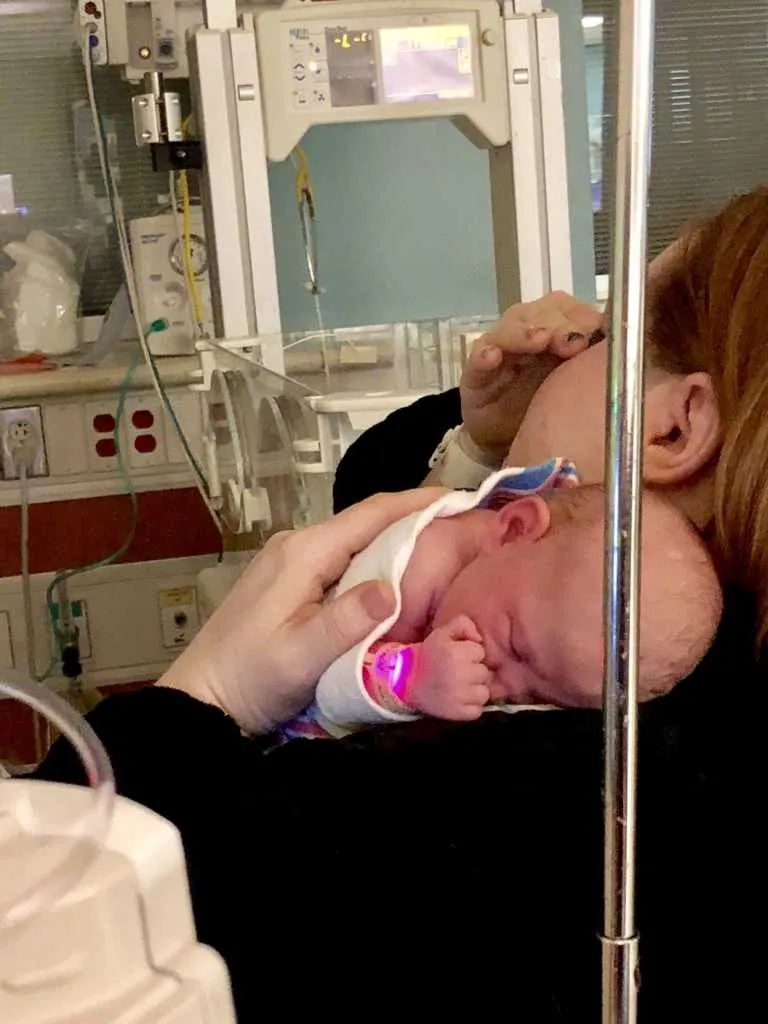
When I finally got to see her, I couldn’t hold back the tears. There she was, my baby girl, so tiny, so fragile, yet so strong. She had 10 fingers and 10 toes, but her hands and feet were fused together due to the effects of Spina Bifida. Her head was a bit misshapen due to cranial synostosis, a condition caused by the early fusion of skull sutures. But despite everything, she was perfect in my eyes.
Annalise’s first few months were filled with surgeries, therapy, and medical treatments. The road was incredibly difficult. Watching my baby girl endure one surgery after another was heartbreaking. Yet, through it all, Annalise showed an incredible spirit. She fought for every milestone, every improvement, and slowly but surely, she began to thrive.
Today, Annalise is a testament to resilience, strength, and hope. While she still faces many challenges, she continues to make strides in her development. She can now walk with the aid of special braces, and she’s learned to communicate and engage with the world around her. Her progress is nothing short of a miracle, and every day with her is a gift.



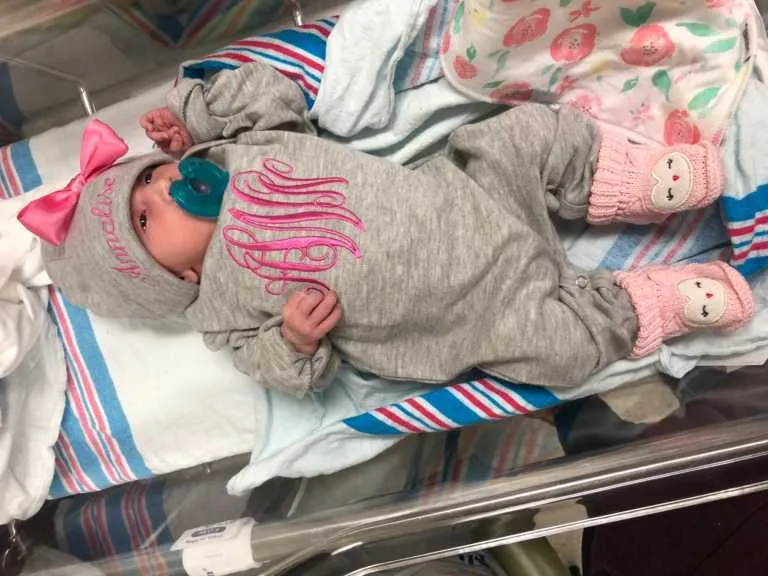
Looking back on everything we’ve been through, I am in awe of Annalise’s strength. She has taught us what true resilience looks like, and her unbreakable spirit has inspired everyone around her. We know there will be more challenges ahead, but as her parents, we are ready to face them with her, just as we always have.
Annalise may have been born with Spina Bifida, but she is not defined by it. She is defined by her strength, her courage, and the unwavering love that surrounds her. We are so proud of the beautiful girl she is becoming, and we are grateful for every step of this journey that has brought us closer together as a family.
Charlie’s Melody of Strength: A 3-Year-Old’s Journey Through Music and Cancer.T1444
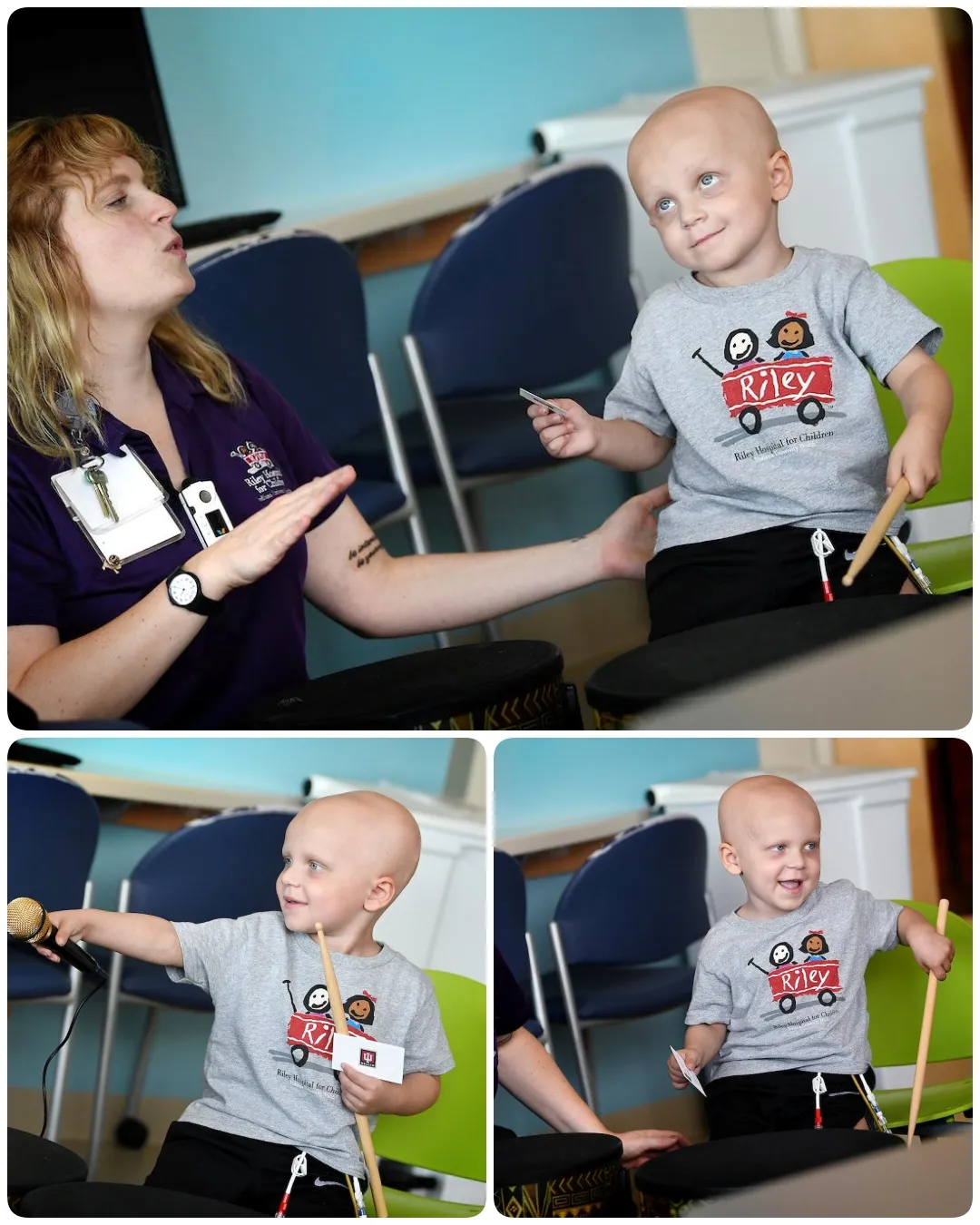
Charlie Lane, at just 3 years old, has an infectious joy that fills any room he enters. Though his tiny frame has faced battles that most children never have to experience, Charlie’s spirit is bright, especially when the music plays. On this particular afternoon, in a quiet room at Riley Hospital for Children, Charlie was immersed in the sounds of a drumbeat and his own voice as he played the drums and sang along with Music Therapist Caitlin Krater. It was a moment of happiness for both Charlie and Caitlin, who have spent many afternoons together singing songs from “The Greatest Showman” soundtrack.
“Anything musical makes him happy,” said Kate Lane, Charlie’s mother, watching with a smile as her son joyfully banged on the drum, his face lit up with excitement. For a child facing the grueling challenge of cancer treatments, moments like these were a welcome distraction and a way to bring joy back into his day.
Since March, Charlie has been a patient at Riley Hospital for Children, battling a life-threatening disease with a strength that his family had never imagined. Charlie had been diagnosed with a rare form of cancer, and his journey began with the shock of diagnosis and the immediate need for treatment. In the months since, he had completed five rounds of chemotherapy, each one leaving its mark on his little body.
Yet, despite the toll it took, Charlie remained resilient—his love for music and his joy in playing drums providing him with an outlet for his feelings and a way to stay connected to his childhood, even amid the uncertainty of his illness.
Charlie’s mother, Kate, remembers the first time Charlie was introduced to music therapy at Riley. It was a suggestion from one of the hospital staff, who believed that music could be a powerful form of emotional release and healing during such a difficult time. At first, Kate wasn’t sure how Charlie would respond, but as soon as the music started, it was clear that it was something special for him.
“From the very first session, Charlie was hooked,” Kate recalls, her voice filled with a sense of relief. “It wasn’t just a distraction; it was his way of feeling normal again. For an hour or two, he could just be a kid, enjoying something he loved. It’s been a lifesaver for us.”
Charlie’s music therapy sessions with Caitlin Krater have become a regular part of his treatment routine. Each session offers a break from the constant medical procedures, the needles, the hours spent in hospital beds, and the uncertainty that comes with cancer treatment. Instead, Charlie gets to focus on the simple joys of singing and playing drums. It’s a chance for him to engage with something that brings him happiness, and a chance for Caitlin to connect with him in a way that makes him feel seen and heard.
On this particular day, they were deep into a marathon session of songs from “The Greatest Showman.” Charlie banged the drum with excitement as Caitlin strummed her guitar, both of them laughing and singing in perfect harmony. For a solid 90 minutes, the world outside the music room faded away, leaving only the sound of the beat and the pure joy that radiated from Charlie.
“Isn’t this fun, Charlie?” Caitlin asked as the two sang their way through another song.
Charlie, with his infectious giggle, nodded enthusiastically, his eyes sparkling with energy. For those 90 minutes, he was a carefree toddler once again, free from the weight of his illness. In a life that had been filled with too many hospital visits, needles, and worrying doctors’ appointments, these sessions were the bright spots he looked forward to each week.
For Kate, watching her son so immersed in the music was a moment of both pride and relief. She knew that their life had changed forever when Charlie was diagnosed, but she also knew that, with the help of the hospital, the medical team, and music therapy, Charlie was finding ways to cope. It wasn’t just about the medicine; it was about providing him with experiences that reminded him of what it was like to be a child—to be happy, to sing, to play.
“Music therapy has been a huge part of Charlie’s recovery,” Kate said. “It’s not just about the physical treatments; it’s about the emotional and mental side of things too. He’s a lot more relaxed when he can just have fun. It helps with everything—the pain, the anxiety, the stress. It’s like a little slice of normal in this otherwise chaotic world.”
Despite the challenges he faces, Charlie continues to fight his cancer with the same fierce determination that he brings to his music. His first round of stem cell transplants has recently begun, part of a three-round process that will hopefully help him recover. These transplants, while necessary, come with their own set of risks and struggles. But for every difficult moment, there is a new victory to celebrate—whether it’s another successful therapy session or another day of feeling stronger.
Through it all, Charlie’s love for music remains constant. In between chemotherapy rounds, stem cell transplants, and the often exhausting recovery process, music is his anchor. It’s the rhythm that helps him find balance, the melody that keeps his spirit high, and the song that reminds him that, no matter how hard life gets, there is always room for joy.
When it was time for Charlie’s music session to end that day, he gave Caitlin a hug, a gesture that spoke volumes about the bond they had created. His little hands, soft from the treatments, reached up to wrap around her in a simple show of appreciation. For Caitlin, it was a reminder of why she does what she does—to help children like Charlie find their voice, their joy, and their strength, even in the face of adversity.
As Charlie prepared to take a nap after his marathon music session, Kate couldn’t help but smile as she looked at her son, exhausted but happy. “We’ll be back next week,” she whispered to him. And as Charlie drifted off to sleep, she knew that no matter how long the road ahead might be, music would always be there to help him through.
For Charlie Lane, music therapy isn’t just a treatment—it’s a lifeline. And through the songs and the beats, Charlie continues to show the world that even in the most difficult of times, there is always a melody of hope.Continue reading