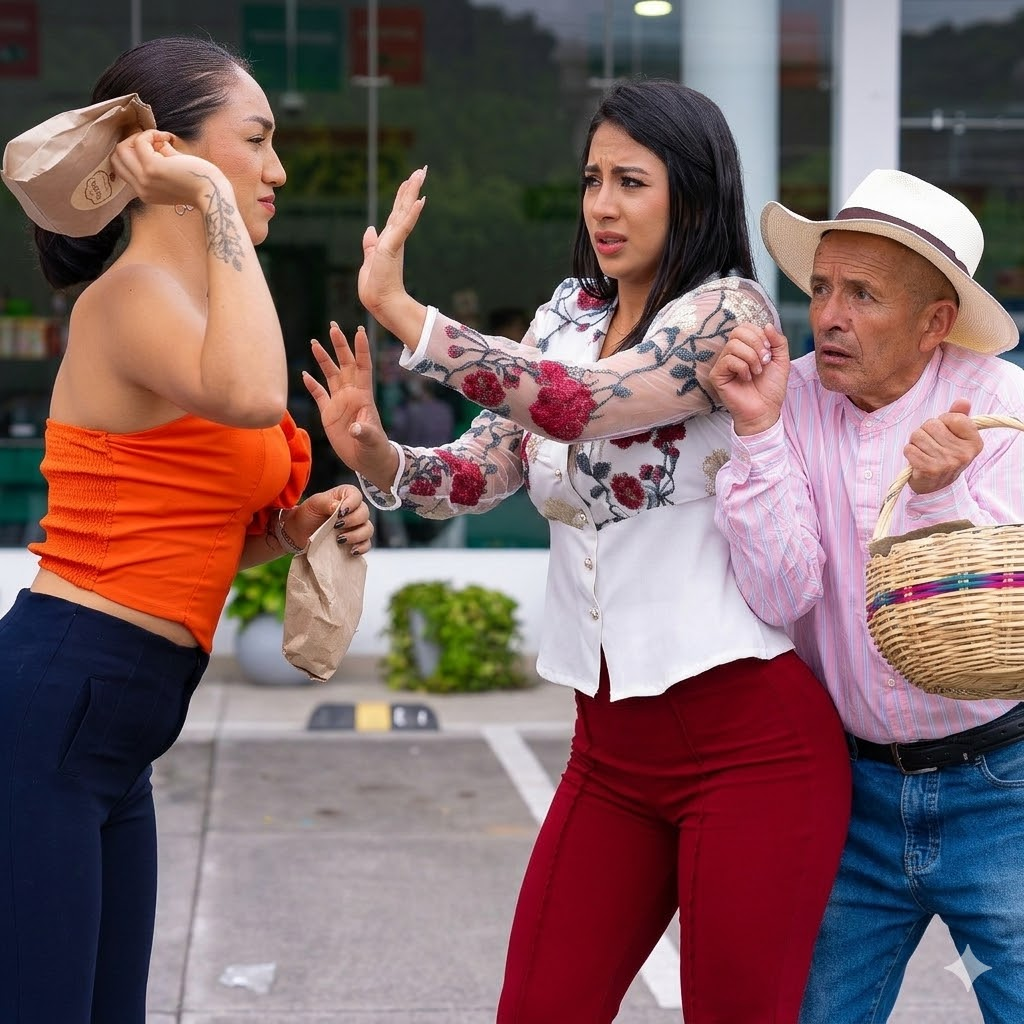
Daniel looked at the man’s clothes, then at the handmade labels, and his mouth twisted.
“Are you joking?”
“No, sir,” Yurlin replied carefully. “I only thought maybe if you smelled it or tasted—”
“I don’t need to taste it,” Daniel cut in. “Do you understand what kind of brand image we maintain here?”
Don Vicente stepped forward politely. “Sir, I know I may not look important, but my coffee is—”
Daniel raised a hand. “Enough.”
The room went cold.
Then, with the fake patience people use when they think they are being generous, Daniel said, “Please wait outside for a moment, sir. I need to speak to my employee.”
Don Vicente nodded and stepped out.
The second the door closed, Daniel turned on Yurlin.
“Have you lost your mind?”
Yurlin blinked. “Sir?”
“You brought a farmer with paper bags into my office as if we’re some kind of charity stand. Do you think I built this business on pity?”
“It wasn’t pity,” Yurlin said quietly. “I thought it might actually sell.”
Daniel laughed once. “You are here to follow instructions, not have ideas.”
The words burned, but Yurlin held herself together.
“What should I tell him?”
“Tell him no.”
She hesitated.
Daniel leaned back in his chair. “And if he feels bad about it, that will be your fault for giving him false hope.”
Yurlin walked out with a weight in her chest. Don Vicente was standing exactly where she had left him, both hands resting on the little coffee bags like he was protecting them from the world.
“Well?” he asked.
She took a breath. “The store won’t take the product.”
The hope in his face dimmed immediately, but he did not complain.
“I understand,” he said softly. “I spent all my savings grinding and packaging these samples. I thought maybe…”
His voice trailed off.
Yurlin looked at the coffee, then toward the entrance doors, then back at him.
And then she did something foolish.
Or brave.
Or both.
“Come with me,” she said.
She walked him to the entrance, set up a small cardboard stand near the outer walkway, and placed two bags of coffee beside a handwritten sign: Local Farm Coffee – Fresh and Honest.
Don Vicente stared at her. “Do you think this will work?”
“If your coffee is as good as it smells,” Yurlin replied, “then the right people will notice.”
For the first time that day, he smiled fully.
“Then may God help us both.”
By noon, they had sold nearly everything.
That was the part no one expected.
Customers stopped for the scent. Then they stayed for the taste. Yurlin had borrowed small paper cups and made samples with hot water from the café counter. People came out of the supermarket carrying branded coffee bags and went back in holding Don Vicente’s instead.
A woman bought one, then returned with her sister for three more.
An old man tasted it and said it reminded him of the coffee his mother used to brew before dawn.
A young couple bought two bags “just to try,” then came back asking if there were more.
Within hours, the little stack of money in Yurlin’s apron pocket had grown thick enough to make her stare.
“You see?” Don Vicente said, delighted. “Good things do not always need fancy packaging.”
Yurlin laughed. “No, they don’t.”
That laughter ended the moment Natalia saw them.
She stormed into Daniel’s office like a spark looking for fire.
“You are not going to believe what Yurlin is doing outside.”
Daniel, already in a bad mood, followed her to the entrance. When he saw the little stand, the crowd of customers, and the empty space where the coffee bags had been, his face changed from annoyance to fury.
“You!” he barked. “My office. Now.”
Yurlin’s stomach dropped.
Inside the office, Daniel didn’t even wait for the door to close.
“What exactly did you think you were doing?”
Yurlin tried to remain calm. “Sir, I only thought if people tried it, they might want the store to consider—”
“Since when are you paid to think?”
She flinched.
Daniel walked closer, his voice colder now. “You disobeyed a direct order. You used company space without authorization. You made me look like a fool.”
“I was only trying to help.”
“And that is exactly your problem,” he snapped. “You mistake emotion for business.”
Then he pointed toward the door.
“You’re fired.”
The room went silent.
For one strange second, Yurlin thought she had misheard him.
“Sir… please. I’m in my last semester. I need this job to pay rent.”
Daniel folded his arms. “That is not my concern.”
When she didn’t move, he called for security.
Yurlin walked out before they arrived. She kept her chin up until she reached the sidewalk, where Don Vicente was folding his empty sign with careful hands.
When he saw her face, he understood at once.
“They fired you.”
She nodded, and this time the tears came.
“Because I tried to help.”
Don Vicente’s expression darkened with sadness. “Then that supermarket does not deserve you.”
She gave a broken laugh. “That doesn’t solve my rent.”
As if on cue, life struck again.
That same evening, her landlord came to the small apartment she had been struggling to keep.
He handed her a final notice and said, without cruelty but without softness, “Tomorrow morning, if you do not pay, I come back with police.”
The paper shook in her hands.
When he left, Don Vicente, who had insisted on walking her home, quietly took the money they had earned from the coffee sales and held it out to her.
“Take it.”
She shook her head immediately. “No. That’s yours.”
“Then consider it a loan,” he said. “Because I will not stand by and watch you be thrown into the street after what you did for me.”
Yurlin swallowed hard. “I’ll pay you back. With interest.”
He smiled. “As you wish.”
The next morning, they were back on the sidewalk selling coffee.
No uniforms.
No permission.
No supermarket doors behind them.
Just honest work.
And somehow, that made the coffee sell even faster.



People who had tried it the day before returned on purpose.
Some brought neighbors.
Some bought extra bags “in case you run out.”
By ten in the morning, they had enough to stop Yurlin from being evicted.
By noon, they had enough to make Daniel and Natalia nervous.
When Natalia rushed in to tell Daniel that the “street coffee” was outselling the brand inside the store, his vanity could not bear it.
There are some people who cannot accept losing fairly.
So they cheat.
That afternoon, Daniel and Natalia filed a lawsuit.
Their accusation was outrageous: Yurlin had stolen the coffee concept from the supermarket, copied a proprietary formula, and was now committing fraud by selling it independently.
When the legal notice arrived, Yurlin felt the blood leave her face.
“They’re going to put me in jail,” she whispered.
Don Vicente took the papers, read them slowly, and said only one thing:
“No, they won’t.”
“But we have no patent,” she cried. “No trademark. No money for a lawyer.”
He was quiet for a moment.
Then he said, “I know someone who owes me a favor.”
The next day, the most respected attorney in the region, Juan Pablo Aliaga, walked into Yurlin’s tiny apartment and introduced himself as Don Vicente’s legal representative.
She almost laughed from pure disbelief.
“You’re joking.”
“I never joke about court,” the lawyer replied. “And I especially do not joke when good people are being cornered by dishonest ones.”
In the courtroom, Daniel looked confident. Natalia looked smug. They whispered to each other while Yurlin sat rigid with fear, hands clenched tightly in her lap.
The judge reviewed the papers. Daniel’s lawyer argued aggressively. The story sounded almost believable on paper.
Then Juan Pablo stood.
“Your Honor, before judgment is given, we would like to call one final witness.”
Daniel’s smile faded.
A murmur ran through the courtroom as the witness entered.
It was Don Vicente.
But not dressed as the humble farmer Yurlin knew.
He wore a dark tailored suit.
His shoes were polished.
His posture was commanding.
His face held the same warmth—but now it was joined by undeniable authority.
Daniel frowned. Natalia looked confused.
Then Don Vicente spoke.
“My name is Vicente Corralino,” he said clearly. “I am the founder, owner, and chairman of the Corralino supermarket chain.”
The courtroom erupted.
Daniel stood halfway out of his chair. “That’s impossible!”
Vicente calmly handed over identification, corporate documents, and something else far more powerful:
A patent certificate.
The judge examined it carefully.
“My coffee brand has been legally registered for more than ten years,” Vicente said. “I disguised myself to observe how people in my company treat those they believe have nothing to offer.”
He turned, not to the judge, but to Daniel and Natalia.
“These two falsified documents, abused their authority, attempted to destroy a young woman’s future, and tried to steal a product that was never theirs.”
Yurlin stared at him in shock.
Everything suddenly made sense.
The quality of the coffee.
His quiet confidence.
The mysterious lawyer.
The patience in his eyes.
He had not been testing the market.
He had been testing people.
The judge’s face hardened as the false evidence was exposed.
The ruling came quickly after that.
Yurlin was cleared of all charges.
Daniel and Natalia were ordered arrested for fraud and document falsification.
Natalia cried.
Daniel shouted.
The officers did not care.
And Yurlin sat there in stunned silence while her entire life changed in less than five minutes.
Outside the courthouse, she finally turned to Vicente.
“You… you were the owner the whole time?”
He nodded.
“Why did you hide it?”
“Because titles reveal less than people think,” he said. “Money makes many people polite. Poverty makes them honest.”
She lowered her eyes, embarrassed now by how she had spoken to him so casually, how she had offered him cardboard signs and borrowed sample cups.
But Vicente smiled gently, as if reading her thoughts.
“Do not be ashamed. You were the only one who saw value before status. That matters more to me than any business report ever could.”
Yurlin felt tears rise again, but this time they were not from fear.
“My father was a farmer too,” she said softly. “I know what it means when people look at the work in your hands and still act like it isn’t worth anything.”
Vicente’s expression softened.
“That,” he said, “is exactly why you passed.”
She blinked. “Passed?”
He took out an envelope and handed it to her.
Inside was a formal appointment letter.
Branch Manager – Corralino Supermarkets
Yurlin looked up in disbelief.
“I don’t understand.”
“I came disguised because I wanted to know which of my employees still had a heart,” Vicente said. “You risked your job for someone you thought could do nothing for you. You defended effort. You protected dignity. And when things became difficult, you still chose honesty.”
He folded her fingers around the letter.
“That is the kind of person I want leading one of my stores.”
For a moment, Yurlin could not speak.
Then she did the only thing her overflowing heart could manage.
She hugged him.
He laughed softly and returned the embrace with fatherly warmth.
“Welcome to the team, Manager Matamoros.”
And for the first time in a long time, Yurlin laughed without fear.
Because sometimes life tests us when we think we are only helping someone else.
Sometimes the person everyone looks down on is the one quietly measuring the worth of every soul in the room.
And sometimes, the kindness you offer a stranger when no one is watching becomes the very thing that changes your life forever.
That week, Yurlin almost lost everything.
Her job.
Her home.
Her reputation.
Her peace.
Instead, she gained something far greater.
Proof that dignity matters.
That honest work speaks loudly.
And that a kind heart, even in a world obsessed with appearances, is still the rarest qualification of all.