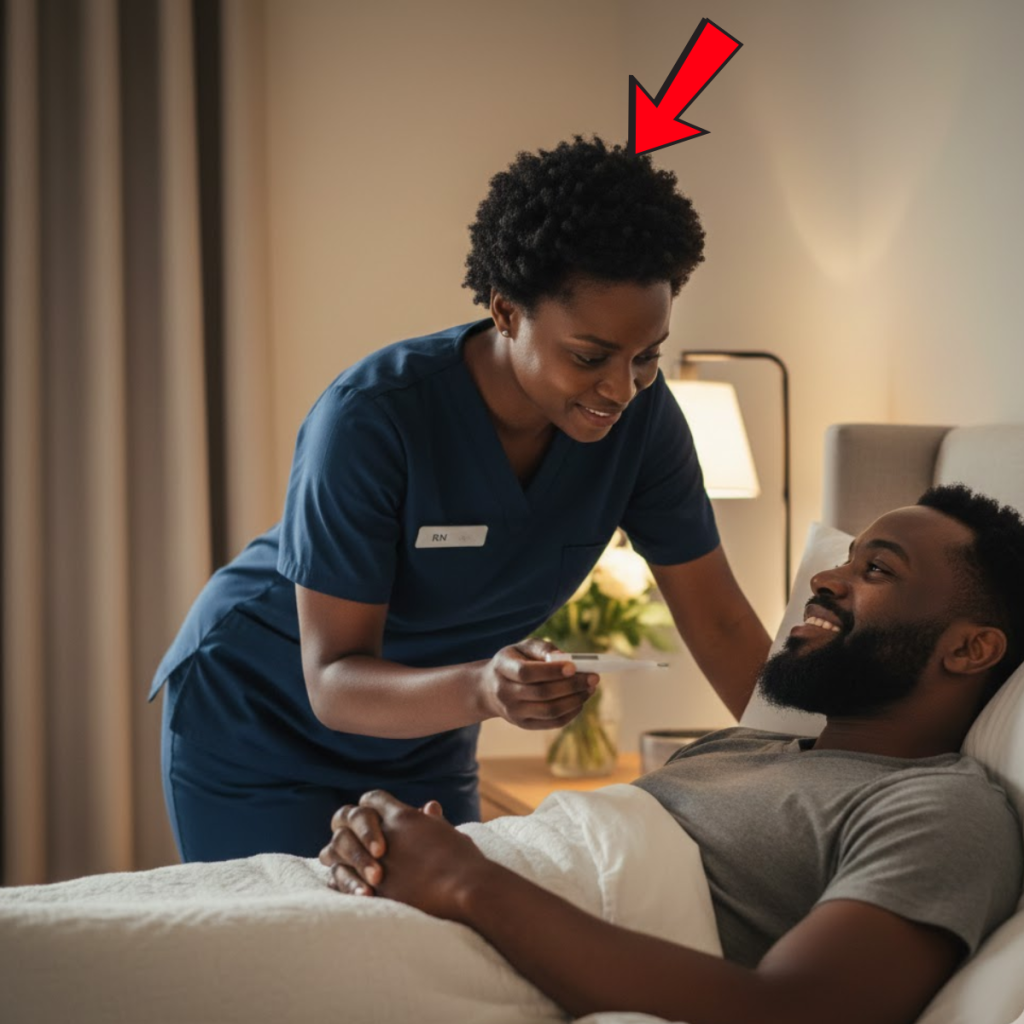
Winter in Mexico City has a cruel way of slipping through the cracks—not only the ones in poorly sealed windows, but also the ones in the soul. In a small apartment on the east side, where the walls seemed to exhale dampness and the ceiling threatened to give in, Valeria counted coins. One, two, five… the metallic clinking on the splintered wooden table was the soundtrack of her insomnia. It was eleven at night, and the cold bit hard—but not as hard as the anxiety squeezing her chest.
A few feet away, on a mattress that had seen better decades, Camila slept. At six years old, she hugged a teddy bear missing one eye, its fur so worn it looked like weathered leather. Valeria looked at her and felt that devastating mixture of infinite love and corrosive guilt. Camila dreamed, unaware that the coins on the table barely covered a loaf of bread and a carton of milk. Twelve hours on her feet waiting tables, enduring leering stares from customers and the manager’s shouting—for this. For nothing.
Soft knocks at the door pulled her from her trance. It was Karina, her neighbor—a woman with a heart bigger than her financial means—bringing a bowl of hot soup.
“You haven’t eaten, Val,” Karina whispered, walking in without asking and placing the bowl on top of the unpaid bills. “And with that funeral face, you’re not going to fix anything.”
Valeria tried to smile, but her lips only trembled. The smell of broth reminded her that her stomach had been empty since dawn. She sank onto the couch, defeated.
“I can’t do this anymore, Karina. The rent goes up next month. Camila needs shoes for school—the ones she has are so tight she limps home. I’m failing.”
Karina sat beside her, took her rough hands, and dropped the bomb.
“I heard about a job. It’s not easy, I’m warning you. In fact, they say it’s hell. But they pay triple what you earn at the café. Triple, Valeria.”
Valeria’s eyes widened. Triple? That meant shoes, heating, decent food. It meant dignity.
“What do I have to do? Who do I have to kill?” she joked bitterly.
“Almost. It’s taking care of Santiago Caruso. The millionaire who had the accident a few months ago. He lives in that mansion on the hill that looks like a mausoleum. They say that since he ended up in a wheelchair, his temper is… well, he’s fired three nurses this week. He’s rude, bitter, and, according to everyone, unbearable.”
Valeria looked at her sleeping daughter. She remembered the humiliation of asking for groceries on credit at the corner store. She remembered the cold.
“I’ve dealt with drunks, harassers, and poverty. A bitter rich man doesn’t scare me. When do I start?”
The interview was a cold formality with a housekeeper named Rosita, a woman who seemed made of starch and strict rules. But Valeria got the job—not because of medical credentials, which she didn’t have, but because of the firm desperation in her eyes. “If you last a week, it’ll be a miracle,” Rosita had told her while handing her the gray uniform.
The first time she saw Santiago Caruso, she understood the warnings. He was sitting in his wheelchair facing a massive window, his back to the door, in a room that smelled of medicine and loneliness.
“You’re late,” he said without turning around. His voice was deep, a mix of baritone and sandpaper.
“It’s exactly eight o’clock, Mr. Caruso,” Valeria replied, her heart racing but her voice steady.
Santiago turned his chair. He was an attractive man with strong features, but his face was shadowed by an unkempt beard and, above all, by a dark cloud of perpetual anger. His eyes were two wells of resentment.
“Don’t answer back. Don’t speak unless it’s necessary. Give me the pills and stand in the corner. I don’t want your pity or your cheap conversation.”
The first days were trench warfare. Santiago hurled insults like grenades; Valeria dodged them with silence and efficiency. He would knock over the food tray if the soup was lukewarm; she would pick it up without complaint, heat it again, and place it back in front of him with a defiant look. He hated her because she didn’t break. She pitied him because she saw that his hatred wasn’t aimed at her, but at his own motionless legs and at a past that haunted him.
But Valeria had a secret—a small sun that brightened her days off and that, out of necessity, she had begun bringing to the mansion in the afternoons when Karina couldn’t watch her. The instruction was clear: “The child must not make noise. She must not even breathe near him.”
Until one afternoon, the sepulchral silence of the mansion was broken. Not by a shout—but by a child’s laughter. Camila had slipped out of the kitchen and wandered into the “ogre’s cave.” Valeria ran toward the library, terrified, imagining Santiago firing her in a rage, imagining a return to poverty.
But when she reached the doorway, she froze. What she saw took her breath away—not out of fear.
Santiago held a poorly drawn picture in his trembling hands, and Camila, with her disarming innocence, pointed at the paper.
“That’s you,” the little girl was saying. “But I gave you a superhero cape, because wheelchairs are like race cars.”
Valeria expected an explosion. She expected fury. But Santiago Caruso—the man who had made trained nurses cry—had glassy eyes.
“No one has ever drawn me as a superhero,” he murmured, his voice breaking.
Valeria sighed in relief, thinking the worst was over, that maybe—just maybe—the beast was being tamed and her life was about to improve.
She had no idea how wrong she was.
Because while she was fighting to melt the ice in a stranger’s heart, the real danger was approaching from her own past. A shadow she believed she had left behind was about to knock on the mansion door, threatening to destroy not only her job, but the fragile family she was unknowingly beginning to build.
The following days at the Caruso mansion transformed in ways no one—not even strict Rosita—could have predicted. Camila became the catalyst the house needed. The girl didn’t see a bitter millionaire; she saw a friend who needed company. And Santiago, starving for a kind of honesty money couldn’t buy, let himself be loved.
It started with small gestures. Santiago stopped yelling when Valeria entered. Then he began asking about Camila’s school. One afternoon, Valeria found them in the garden. Santiago—who hadn’t gone outside in months—was letting Camila place flowers on his lap while she read him a story. The sunset light softened the lines of pain on his face, and for the first time, Valeria saw the human being behind the armor: a wounded man, yes—but capable of immense tenderness.
“Your daughter has a gift, Valeria,” Santiago told her that night as she adjusted his pillows. He no longer used that commanding tone.
“She sees the best in people, even when they can’t see it themselves,” Valeria replied, daring to brush his hand for a second.
Santiago didn’t pull away. “Maybe she sees who I was before… this. Or maybe she sees who I could be if I stopped feeling sorry for myself. Thank you, Valeria. For not quitting. For staying when I was a monster.”
An electric silence followed, heavy with unspoken words. Valeria felt warmth rise to her cheeks. In Santiago’s eyes there was no longer darkness, but an intensity that made her feel seen, valued—and dangerously desired.
The trial by fire came with the invitation to the Foundation Gala. Santiago had refused to attend for years, ashamed of his condition. But that morning, with newfound determination, he asked Valeria to accompany him.



“Not as my nurse,” he clarified shyly, “but as my date. I need someone real by my side, not those hypocrites.”
The night of the gala was magical. Valeria, wearing a midnight-blue dress Rosita had found, shone. But the most surprising transformation was Santiago’s. He faced the pitying stares of high society with his head held high, holding Valeria’s hand as if she were his anchor. When a former partner tried to humiliate him with a comment about his “invalidity,” Santiago smiled coolly and replied, “My legs don’t work, Daniel, but my brain and my heart are better than ever—something you, with all your health, can’t say.” Valeria felt fierce pride. That was her boss. That was… something more.
On the ride home, in the privacy of the car, the tension broke. Santiago confessed his guilt over the death of his fiancée in the accident that left him paralyzed. Valeria cried with him and told him about Camila’s father abandoning them. Two broken souls discovering that their pieces fit perfectly. There was a kiss—tentative but full of promise—under the moonlight at the mansion entrance. It felt like a happy ending.
But real life is rarely so kind.
Two days later, the bubble burst.
It was a sunny morning. Valeria hummed in the kitchen while preparing Santiago’s special breakfast. The doorbell rang—sharp and insistent. Rosita answered and returned pale.
“Valeria… they’re asking for the girl.”
Valeria’s heart stopped. She ran to the foyer and felt the ground open beneath her feet. There, standing in a cheap suit with a smug smile, was Samuel—the man who had gotten her pregnant and run away. The man who hadn’t sent a single cent in six years.
“Hi, sweetheart,” Samuel said, glancing around at the luxurious foyer. “Looks like you’ve done well for yourself. I’m here for my daughter.”
Camila, coming down the stairs with her drawings, froze at the sight of the stranger. Valeria rushed forward and hugged her, shielding her with her body.
“Get out of here, Samuel. You have no right. You don’t know her.”
“I’m her father. I have rights. And I’ve heard you work for a millionaire. I’m sure he’ll understand that a father needs… compensation to avoid taking the girl far, very far away.”
It was blackmail. Pure and simple. Samuel didn’t want Camila—he wanted money. Terror paralyzed Valeria. She had no money, no lawyers, no power. Samuel stepped forward, reaching for Camila’s arm.
“Come with Daddy, sweetheart.”
“Take your filthy hands off her!”
The voice thundered through the hall. From the side corridor, Santiago advanced in his motorized wheelchair at full speed. His face no longer showed bitterness, but regal fury—the fury of a king defending his castle. He positioned himself between Samuel and the women.
“And who are you? The cripple who looks after her?” Samuel sneered, though he took a step back under Santiago’s intense gaze.
“I’m the man who will devote every cent of his fortune and every second of his time to destroying you if you ever breathe the same air as them again,” Santiago said calmly—lethally calm, far more terrifying than any shout. “Rosita, call the chief of police. Tell him we have an intruder attempting to kidnap a minor. And call my lawyers. I want a restraining order drafted in ten minutes.”
Samuel paled. He looked around, realizing his cheap intimidation didn’t work here.
“She’s my daughter…” he muttered weakly.
Santiago moved closer until the wheels of his chair nearly touched Samuel’s shoes.
“Being a father isn’t donating DNA, you idiot. Being a father is being there when they have a fever, when they have nightmares, when they need a hug. You’re not a father. You’re a mistake from the past that has just been corrected. They are my family now. And I protect my family.”
Camila gently stepped away from her mother and placed her small hand on Santiago’s arm.
“He’s my Daddy Santiago,” she said firmly. “You’re ugly and mean. Go away.”
Samuel’s defeat was total. It wasn’t the police threat or the money that broke him—it was the sight of that unbreakable unity before him. He turned and ran like the rat he was, disappearing from their lives forever.
When the door closed, silence returned to the foyer—but this time it was warm. Valeria fell to her knees, crying from the release of so much tension. Santiago maneuvered his chair and, with an effort that brought a grimace of pain, leaned down to embrace them both.
“Did you mean it?” Valeria asked through tears. “That we’re your family?”
Santiago wiped away a tear with his thumb, infinitely tender.
“Valeria, before you arrived, I was dead inside this huge house. You brought me light. You’re not just my family. You’re my whole life.”
Camila squeezed into the hug, laughing.
“So you won’t get mad if I leave my toys in the living room?”
Santiago burst into a clean, joyful laugh that echoed off the marble walls.
“We’ll negotiate that, little artist.”
Months later, the Caruso mansion was no longer a cold place. There were toys on the Persian rug, the smell of baked cookies in the kitchen, and laughter in the halls. Santiago was still in his chair, yes—but Valeria had fulfilled her job beyond what was written: she hadn’t just helped heal his physical wounds; she had healed the soul of a broken man. And in the process, she had found the home she and her daughter deserved.
Because sometimes love doesn’t arrive on a white horse—it arrives in a wheelchair. And true wealth isn’t in bank accounts, but in the hands that hold you when the world falls apart.