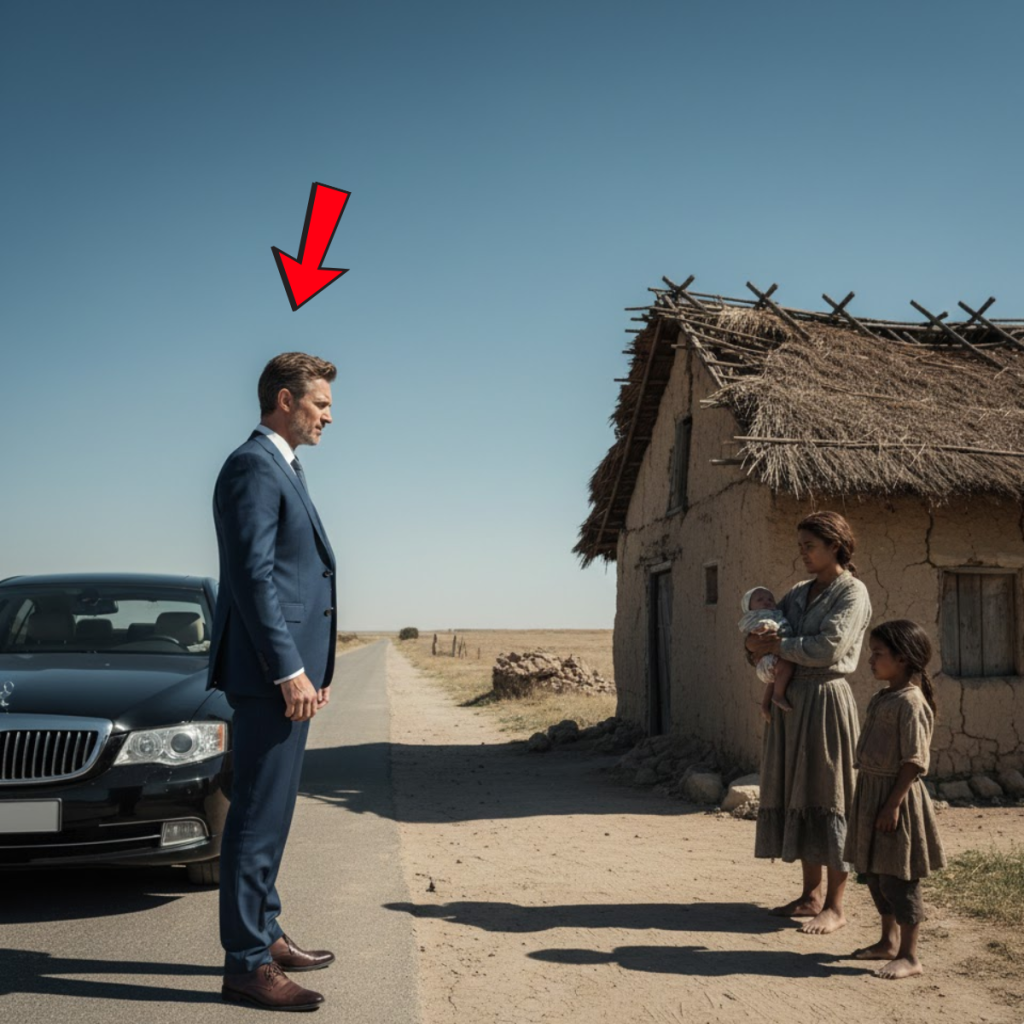
Rain slammed violently against the windows of the 35th floor, distorting the city lights into blurred smears. Ricardo Valmont, owner of one of the largest construction empires in the country, held a financial report in hands that almost never trembled. But that night, the paper shook between his fingers. Someone was stealing. And it wasn’t spare change.
For weeks, inventories of industrial cleaning supplies—expensive products, specialized chemicals—had shown alarming discrepancies. Ricardo, a man who had built his fortune on trust and absolute control, felt betrayed. The worst part wasn’t the money; it was the suspicion. All the evidence pointed to Esperanza, the night-shift cleaning woman. That quiet woman with downcast eyes and calloused hands, who always stayed late, polishing desks that already gleamed.
“How is this possible?” Ricardo murmured, turning off the lights in his office and letting himself sink into the darkness. He decided not to confront her with paperwork. He wanted to see it himself. He wanted to understand the audacity of stealing right under his nose.
He hid behind the half-open door of his private office. At exactly 8:00 p.m., he saw her enter. Esperanza moved with reverent meticulousness, cleaning every surface. But then her behavior changed. She glanced nervously from side to side and pulled out a key she shouldn’t have had. She opened the supply closet and, in a hurry, filled a large bag with hospital-grade disinfectants, surgical masks, and gloves. She took nothing of commercial value—no laptops, no silver ornaments. Only extreme hygiene products.
Ricardo felt a mix of disappointment and fury. He had been generous with his employees, paying above average. Why steal soap? When she left the building, Ricardo followed her—not in his chauffeur-driven limousine, but in his personal car, keeping a careful distance.
Esperanza boarded a battered bus that carried her far from the financial district, crossing the city’s outer rings until reaching neighborhoods where asphalt disappeared and streetlights were a rare luxury. Ricardo had to leave his luxury car several blocks away, afraid of drawing attention, and followed her on foot through muddy streets.
He watched Esperanza stop in front of a structure that could hardly be called a house. It was an abandoned building, a gray, half-finished construction, with windows covered in cardboard and plastic. Ricardo’s heart hardened. Does she sell the products here? Does she have a black market? he thought cynically. He crept toward one of the plastic-covered windows, searching for a gap to look through. What he expected to see was a clandestine warehouse.
But what his eyes caught through that slit froze him in place. The cold rain soaked him to the bone, but not nearly as much as the sudden cold that pierced his soul.
Inside, dimly lit by a few candles, three small children waited. The place wasn’t a warehouse; it was an improvised home in absolute misery. But what stopped Ricardo’s heart was seeing what Esperanza was doing with what she had stolen. She wasn’t packing the products to sell them. She was cleaning. With frantic obsession, Esperanza scrubbed the damp walls and concrete floor with the company’s industrial disinfectants.
“Mom, you’re home,” said the oldest boy, Matías, about twelve years old, holding a baby whose breathing whistled in a terrifying way. “Diego is worse. He turned blue twice.”
Ricardo pressed his ear against the plastic.
“I’m here, my love,” Esperanza’s voice broke, but her hands never stopped cleaning. “I brought the strong disinfectants from work. We’re going to kill all the mold. We’re going to turn this place into an operating room so Diego can breathe.”
Ricardo felt as if the ground had opened beneath his feet. The “theft” wasn’t greed. It was a desperate mother trying to sterilize a ruin so her sick child wouldn’t die from a lung infection.
“Mom,” asked a little girl, Sofía, coughing softly, “is Dad watching us from heaven? Does he know we’re cold?”
Esperanza stopped for a second, wiped a tear with the back of her hand, then kept scrubbing the floor.
“Dad is proud of you, because you’re brave. And he’s taking care of us. He would never leave us alone if he had the choice.”
At that moment, the baby, Diego, began to convulse. The sound of his tiny throat struggling for air tore through the silence of the night.
“The steam! Bring the pot!” Esperanza shouted, running to the child.
Ricardo watched as the older children ran to fetch a pot of hot water they had heated on a portable gas stove. They tried to create a homemade vaporizer. It was a scene of pure love and absolute desperation. They were fighting pneumonia with home remedies and love, in a house that was a tomb of dampness.
“It’s not working, Mom—he’s not breathing!” Matías cried.
Esperanza scooped the child into her arms, her face twisted with terror.
“To the hospital. We’re going now. I don’t care if we don’t have money. I don’t care if they report us for living there. Let’s go!”
They ran out into the rain. Ricardo, hidden in the shadows, watched that lioness of a mother carrying her dying cub. The anger he had felt in his office evaporated, replaced by a corrosive shame. He, worried about a few liters of disinfectant, while she was fighting for a life.
He ran to his car, caught up with them on the main avenue, and followed them to San Miguel Public Hospital. He entered shortly after. The emergency room was chaos—crowds and bureaucracy. From the entrance, he saw Esperanza pleading at the counter.
“Ma’am, I need your insurance and a valid address,” the nurse said mechanically, without looking at the barely breathing child.
“I don’t have an address! We live wherever we can! Please, he’s dying!” Esperanza screamed.
“Without paperwork we can’t process admission to intensive care. It’s protocol,” the nurse replied, closing the window.
Ricardo felt a new fury—no longer at Esperanza, but at the world, at his own world of privilege that had blinded him. He pushed through the crowd with the authority that only power gives.
“Treat him right now!” his voice thundered through the room.
Esperanza turned, and when she saw him, she went pale. The fear in her eyes was the final dagger to Ricardo’s heart. She thought he was there to have her arrested for stealing.
“Mr. Valmont… I—I swear I was going to replace the products…” she stammered, clutching her son tighter.
“Be quiet, Esperanza,” he said softly. “Doctor, I’m Ricardo Valmont. I want the best pediatric specialist here in five minutes. I will cover all expenses. Move this child to a private suite and put him on oxygen now. If anything happens to this child, I will buy this hospital just to fire every last one of you.”
The change was immediate. The medical machinery sprang into motion. Diego was rushed away on a gurney. Esperanza remained standing, trembling, staring at her employer in disbelief.
“Why?” she asked when they were alone in the waiting room. “You know what I did.”
“I know why you did it,” Ricardo replied, sitting beside her, not caring that his designer suit got dirty on the plastic chair. “I followed you. I saw where you live. I saw how you used my products to try to save him. Esperanza… why do you live there? You’re my best employee. How did you end up like this?”
Esperanza lowered her gaze, her hands tightly intertwined.
“My husband… he earned a good living. We were a normal family. We rented a house, had an old car. But he died a year ago in a workplace accident.”
“An accident?” Ricardo frowned.



“He was a high-rise welder. He fell from the twentieth floor. The construction company had cut safety costs. The harnesses were old. The platform gave way.”
Ricardo felt a knot tighten in his stomach.
“Which company was it?”
Esperanza looked up. In her eyes there was no hatred—only infinite sadness.
“Valmont Construction. Your company, sir.”
The silence that followed was deafening. Ricardo felt as if a hammer had struck his chest. He vaguely remembered the incident. A report a year ago. “Human error.” “Worker negligence.” That’s how his lawyers had labeled it to avoid paying massive compensation. He had simply signed the papers and moved on with his life.
“They told me it was his fault,” Esperanza continued softly. “That he didn’t secure himself properly. They denied us the pension. Without his income, I couldn’t pay the rent. We lost everything. I ended up cleaning the offices of the same company that killed my husband because it was the only place that paid for the night shift—and I needed the day to take care of Diego.”
Ricardo stood up, unable to breathe. He walked to the hospital window. He was the monster in this story. His budget cuts. His aggressive lawyers. His blindness. He had killed the father, then forced the mother to live in filth, and finally accused her of stealing disinfectant to clean the filth he had condemned them to.
“Fernando… was his name Fernando?” Ricardo asked, his voice breaking.
“Yes. Fernando Morales.”
Ricardo turned around. Tears streamed freely down his face—something no one had seen in decades. He dropped to his knees in front of Esperanza, taking her calloused hands in his.
“Esperanza, there are no words in this world to ask your forgiveness. I signed those cuts. I approved those lawyers. I am responsible for your children sleeping on the floor.”
“Mr. Valmont, please stand up,” she said, uncomfortable.
“No. Listen to me. Diego is going to survive. And you will never go back to that abandoned house. Never again will you have to steal to survive. I’ve spent my life building buildings, but today I realize I’ve destroyed homes.”
The following weeks were a whirlwind. Diego recovered miraculously thanks to the cutting-edge treatments Ricardo funded. But the real transformation happened outside the hospital.
Ricardo gathered his own children—two teenagers he barely saw because he was always “working.” He sat them down and, for the first time, told them a real story. He spoke of his mistake, his guilt, and the Morales family. He told them how money without humanity is just colored paper. His children, who had always seen him as a distant ATM, saw him cry. And for the first time, they truly respected him.
The day Diego was discharged, Ricardo took Esperanza and the children to a quiet neighborhood. They stopped in front of a beautiful house—one with a garden and large windows where sunlight came in, not rain.
“Whose house is this?” Sofía asked, amazed.
Ricardo handed the keys to Esperanza.
“It belongs to Fernando. It’s what he worked his whole life to give you. I’m just the messenger who took far too long to deliver it. It’s in your name, Esperanza. Paid in full. And there’s an education fund so Matías, Sofía, and Diego can attend whatever university they choose.”
Esperanza cried, but Matías, the oldest, looked at Ricardo seriously.
“My dad used to say that real men fix what they break.”
Ricardo met the boy’s eyes and nodded solemnly.
“Your father was a wise man. I’m trying to learn to be one.”
But the story didn’t end with a gifted house. Ricardo knew money didn’t erase blood. A systemic change was needed.
The next day, Ricardo called an emergency board meeting. He entered the conference room not with profit charts, but with a photo of Fernando Morales.
“Starting today,” he announced to the stunned executives, “Valmont Industries will implement the ‘Morales Protocol.’ We will have the highest safety standards in the world. We will double the protection budget. And we will create a family welfare department for our workers, led by our new consultant: Mrs. Esperanza Morales.”
There were protests. Talk of costs and profit margins. Ricardo slammed his fist on the table.
“If we can’t be profitable without killing people, then we don’t deserve to exist as a company. Either it’s done—or you’re gone.”
Months later, a dinner was held. Not at a luxury restaurant, but in Esperanza’s new home. The Morales and the Valmonts were there. Ricardo brought his children.
It was a strange and beautiful evening. At first there was tension, but children, in their infinite wisdom, broke the ice. Diego showed his toys to Ricardo’s teenage children, and instead of being bored, they found themselves laughing and playing on the carpet.
At the end of the dinner, Esperanza proposed a toast. She lit a candle and placed it in the center of the table.
“For Fernando,” she said. “Though he’s not here, he taught us all to see what truly matters.”
Ricardo raised his glass, looking at the woman who had gone from cleaning his floors to cleaning his conscience. He looked at his own children, now chatting animatedly with Matías about soccer and music, connecting in a human way he had never encouraged.
“For Fernando,” Ricardo repeated. “And for second chances we don’t deserve—but have a duty to honor.”
That night, as he left the house filled with warmth and laughter, Ricardo looked up at the sky. It was no longer raining. The stars shone clearly over the city. He understood that he had spent years building skyscrapers to touch the sky—but he had only truly touched it when he knelt down to help someone rise from the ground.
True wealth, he discovered, wasn’t in the financial report on the 35th floor, but in the peace of knowing that night, three children slept warm, safe, and with a future—because he had finally decided to stop being a millionaire and start being a human being.