No one listened to me.
No one took me seriously.
Until the day I came back accompanied…
and the account that “didn’t exist” changed everyone’s fate.
Almost no one remembers when I started going.
To them, I was just another woman—
a recurring shadow in the lobby.
But I remember.
I remember because every visit carried a different weight.
Because every time I walked through those glass doors, I felt like I wasn’t just walking into a bank,
but into my son’s memory.
Every first Monday of the month, at exactly nine in the morning,
I stood in front of the National Bank of the Center branch, in Toluca.
Not a minute earlier.
Not a minute later.
I didn’t carry a purse.
I never needed one.
I only carried my blue folder.
Old.
Worn.
With corners bent by time and by hands.
Inside, there was no money.
There were papers, copies, notes.
And there was a promise.
“Good morning,” I always said, with this tired voice I no longer try to hide.
“I’m here to ask about my son’s account.”
At first, they attended to me out of courtesy.
They smiled.
They nodded.
Then it became routine.
They stopped smiling, but they still asked.
In the end… it became annoyance.
Sighs.
Glances at the clock.
Keys struck with impatience.
“Account holder’s name?” they asked without looking at me,
their eyes fixed on the screen.
“Daniel Ortiz Ramírez,” I replied—always the same, always firm.
They typed.
They waited.
They frowned.
“There is no account under that name, ma’am.”
I nodded.
As if I already knew.
As if it weren’t the answer I had heard for seven years.
“Could you please check again?” I asked.
“It was opened in March, seven years ago. Here, at Toluca Center. The partial number… ends in 48.”
Some laughed quietly.
Others rolled their eyes openly.
“Look, ma’am,” they said,
“there’s nothing here. Maybe your son had an account at another bank.”
I closed the folder.
Slowly.
Carefully.
As if I were closing something alive.
“Thank you,” I replied.
“I’ll be back next month.”
And I came back.
They started calling me the crazy woman from the bank.
I knew because words can be felt even when they’re not said to your face.
The guards already knew my slow steps, my simple clothes, my way of waiting in silence.
A couple of times they tried to stop me.
“You can’t keep bothering the staff,” one of them said—young, uncomfortable.
“It’s already been explained to you.”
I looked him in the eyes.
Without anger.
Without pleading.
“I’m not bothering anyone,” I said.
“I’m asking about my son’s money.”
They never knew how to respond to that.
And they always let me pass.
I lived—and still live—in a sheet-metal house in San Mateo Oxtotitlán.
When it rains, the roof sings.
When it’s cold, the wind slips in without asking.
I washed other people’s clothes three times a week.
My hands cracked, but soap shows no mercy.
I cooked beans, rice, and—if there was luck—a bit of chicken on Sundays.
Not out of hunger.
Out of habit.
Daniel was my only son.
A systems engineer.
Quiet.
Observant.
The kind who listens more than he speaks,
and when he speaks, he says just enough.
Seven years ago, he was killed in an alleged robbery.
One shot.
A file.
A “closed case” far too fast to be true.
Before he died, he told me something I didn’t fully understand at the time:
“If something ever happens to me… go to the bank. Ask about the account. Don’t leave, even if they tell you it doesn’t exist.”
I didn’t understand banks.
Or systems.
Or money.
But I understood promises.
And mothers.



So I went.
Every month.
For seven years.
Whether it rained.
Whether it hurt.
Until one Tuesday, something changed.
The new manager saw me from his office.
I knew by the way his gaze stopped on me—
as if he had seen something he didn’t expect.
“That woman again?” he asked.
“Who let her in?”
He asked for my son’s name.
Daniel Ortiz Ramírez.
When he typed it into his system, his face lost its color.
I didn’t know it then, but I had triggered an alert that was never meant to be touched.
Account blocked by internal audit.
Public disclosure forbidden.
That day, he ordered that I no longer be allowed in.
But the next time…
I didn’t arrive alone.
Part 2
I arrived with a man in a dark suit.
With a woman with a firm gaze and a leather briefcase.
And with a sealed black folder.
“Good morning,” I said calmly.
“Today, I’m not alone.”
“Verónica Salgado, Anti-Corruption Prosecutor’s Office,” she introduced herself.
“Raúl Mendoza, attorney,” said the man.
I opened my blue folder.
“Now,” I said,
“let’s ask properly.”
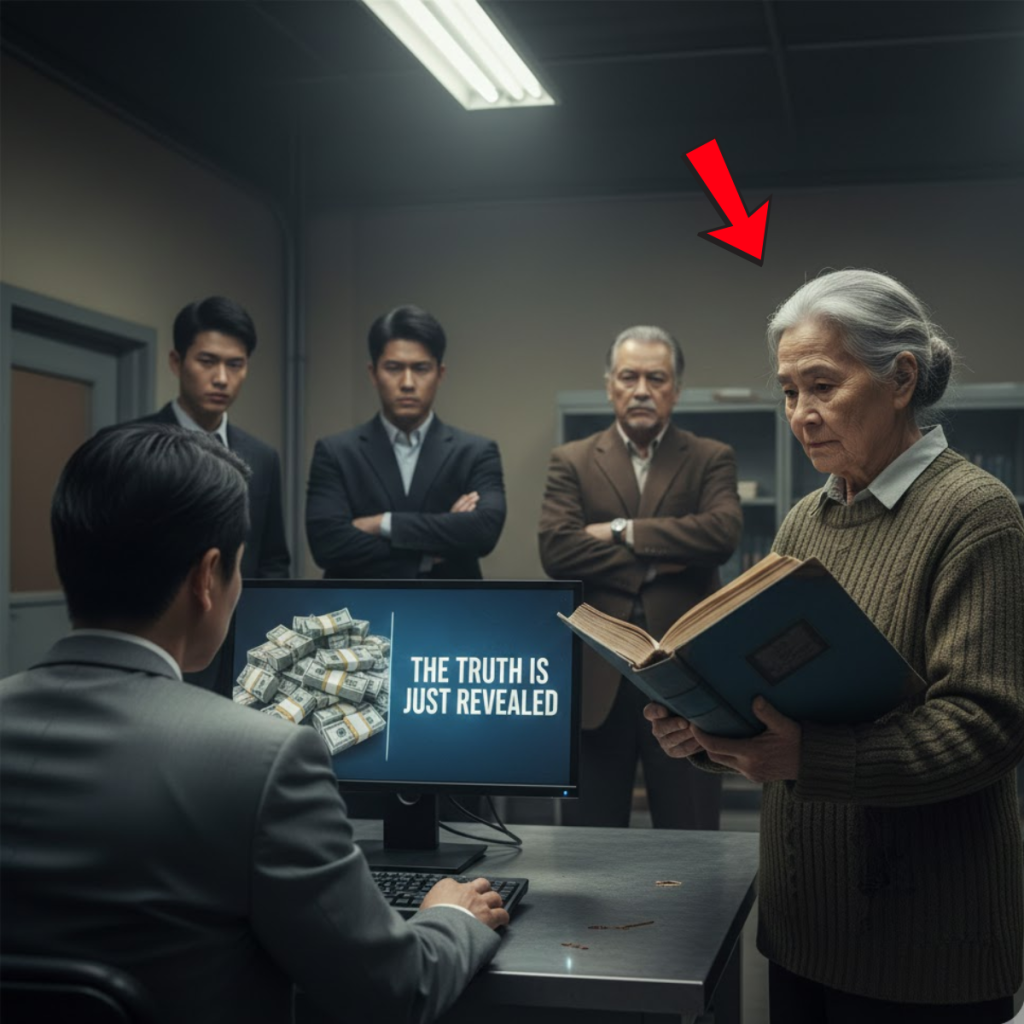
In a closed room, the truth began to come out—piece by piece.
My son wasn’t just an engineer.
He worked for a shell company.
Money laundering.
Diversions.
Phantom funds.
He discovered it.
And he didn’t run.
He documented everything.
Dates.
Names.
Routes.
He opened an account with a special protocol.
It would only activate if he died.
That’s why the account “didn’t exist.”
It existed too much.
“And why didn’t he report it sooner?” they asked.
I lifted my gaze.
“Because he wanted irrefutable proof.
And because he knew no one would believe him…
until I showed up.”
When they opened the account, the amount filled the screen.
Hundreds of millions of pesos.
They weren’t for me.
They were evidence.
Every transfer carried a name.
Every name, a guilt.
That same day, the branch was seized.
The next day, the news exploded.
I gave no interviews.
I never wanted to.
I only asked for one thing:
that my son’s name be cleared.
Weeks later, they placed a discreet plaque in the bank:
Daniel Ortiz Ramírez
Citizen who chose the truth.
I went one last time.
Not to ask.
Just to look.
I walked out slowly, my blue folder under my arm.
I had kept my promise.
And no one…
no one ever laughed at me again.