A Struggling Single Mother Missed a Job Interview to Help a Stranger. The Next Day, a CEO Came Looking for Her.
“Mommy, it’s already 9:30.”
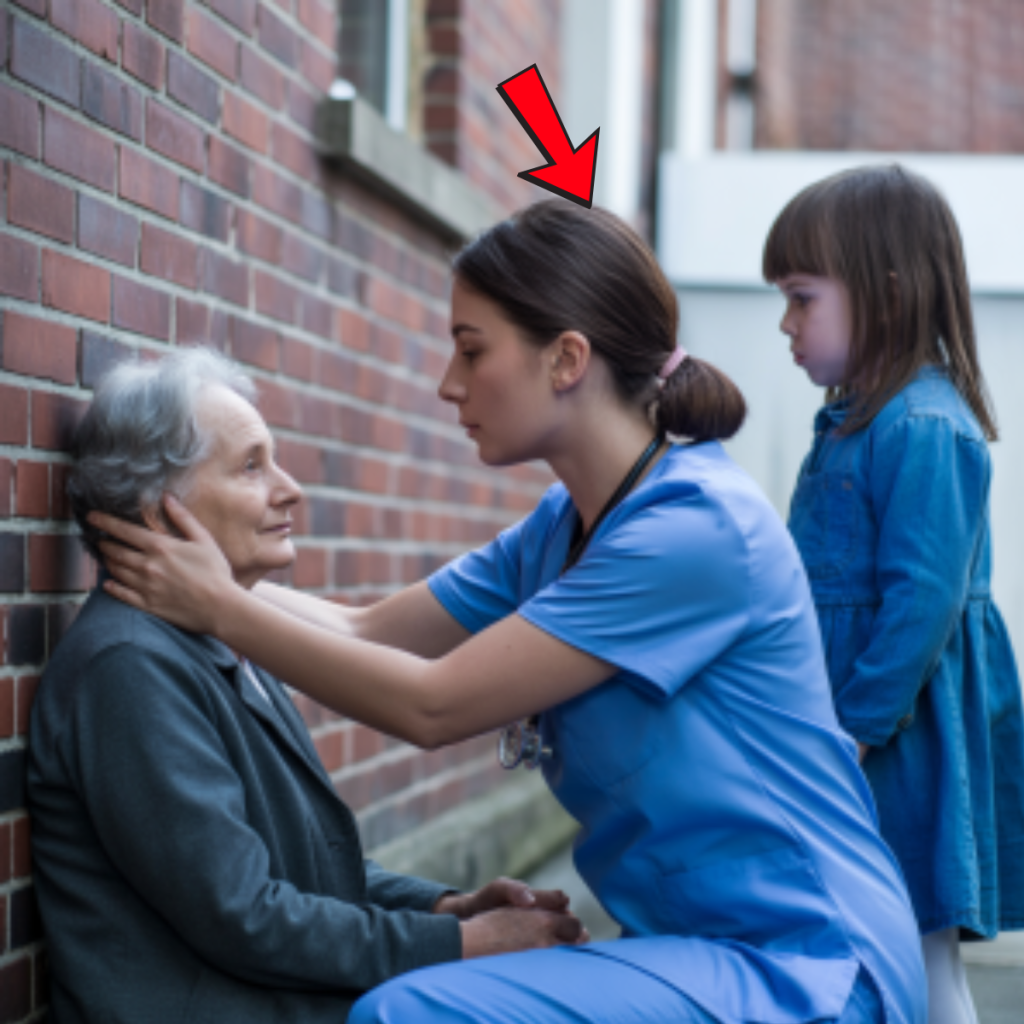
Camila’s hands were trembling as she pressed the fabric of her uniform against the woman’s bloodied forehead.
The cold sidewalk in downtown Bogotá hurt her knees, but the pain was insignificant compared to the weight crushing her chest.
The interview.
San Rafael Hospital. Her only chance.
“Ma’am, can you hear me?
I need you to stay with me.”
The older woman blinked, disoriented. Her expensive clothes—a wool coat that probably cost more than Camila’s monthly rent—stood in brutal contrast to the dusty brick wall she had collapsed against.
“I don’t remember.”
“It’s okay. Stay calm. The ambulance is on the way.”
Luna clung to her mother’s arm, her seven-year-old eyes too large for her small face.
“Mommy, the lady from the hospital said if you arrive late—”
“I know, sweetheart.”
Camila closed her eyes for a second.
Three years of night school.
Countless double shifts.
All for that interview at San Rafael Hospital.
The job that would give them stability. A fixed salary. Benefits.
A job that meant Luna could go to a better school. That they wouldn’t have to count every peso just to buy food.
That job was slipping through her fingers like water.
“But your interview is at 9:30, Mommy. It’s 9:35.”
Tears threatened to spill, but Camila swallowed them.
Not in front of Luna. Never in front of Luna.
“Where am I?” the older woman asked, her voice fragile, frightened.
“Where is my son?”
“Everything will be okay, ma’am. The medical team is on the way.”
Camila checked again. The wound wasn’t deep, but the woman’s confusion worried her. A head injury. Something more.
Across the street, Sebastián Salazar watched the scene with his heart pounding violently.
Twenty minutes earlier, he had received a call from the driver.
His mother—lying on the ground now, blood on her forehead—had gotten out of the car confused, wandering aimlessly. He had searched frantically through the streets until he finally saw her.
But she wasn’t alone.
A young woman in a blue nurse’s uniform knelt beside her, moving with the precision of someone trained for emergencies. A small girl—clearly her daughter—clung to her, whispering something in her ear.
The nurse wasn’t pushing people away. She wasn’t shouting for attention. She wasn’t pulling out her phone to record anything.
She was just helping.
Sebastián took a step toward them, but something stopped him.
He wanted to see.
He needed to see what kind of person helped without expecting anything in return.
The ambulance siren cut through the morning air.
“They’re coming, ma’am. Everything will be fine.”
“Thank you.”
The older woman grabbed Camila’s hand with surprising strength.
“Thank you, my daughter.”
Something broke inside Camila.
The paramedics arrived, efficient and fast. They took control while Camila explained what she had observed—the confusion, the disorientation, the head wound.
“Are you family?” one of them asked.
“No. I just found her like this.”
“Thank you for staying with her.”
Luna tugged on her mother’s sleeve as the paramedics lifted the woman onto the stretcher.



“Mommy, can we go now?”
Camila checked her watch.
9:52. There was no point.
San Rafael Hospital didn’t reschedule interviews.
The HR coordinator had been clear: there were a hundred candidates for the position. If you couldn’t arrive on time for an interview, how could they trust you to arrive on time for your shifts?
“Yes, sweetheart. Let’s go home.”
Luna frowned.
“No, we’re going to the hospital.”
“No, Mommy, you worked so hard for that interview.”
“I did the right thing, Luna. Sometimes that’s more important.”
The words sounded hollow even to her.
They walked toward the TransMilenio station, Luna’s small warm hand in hers.
Camila didn’t look back.
She didn’t see the man in the suit watching them with an intensity that would have made her heart race even faster.
Sebastián waited until the ambulance left, his mother inside, stable. Then he returned to the exact spot where the woman in blue had been kneeling.
There was nothing there—no dropped ID, no clue. Only the memory of her exhausted yet determined face, her steady and gentle hands, and the way she spoke to his mother with genuine respect, not the condescension so many people used with the elderly.
Sebastián pulled out his phone and called his assistant.
“I need you to check the security cameras in this area. Look for a nurse in a blue uniform, brown hair, about 25 to 30 years old, with a little girl. I want to know who she is.”
He followed the ambulance to the hospital, but his mind was already elsewhere.
He would find her.
His mother would want to thank her.
And he needed to meet someone capable of sacrificing so much for a stranger.
The apartment in Kennedy had never felt so small.
Camila dropped her bag on the floor and stood in the middle of the living room, staring at the walls as if they might offer answers. Luna went straight to her little space—a corner of the room separated by a curtain—and pulled out her crayons and paper.
“I’m going to draw the lady you helped, Mommy, so you don’t forget her.”
The tears finally came, hot and bitter. Camila locked herself in the bathroom—the only place where she could be alone—and slid down onto the floor.
Three months. They had savings for three more months. After that… she couldn’t think about after that.
The door opened softly. Luna slipped inside and curled into her mother’s lap without a word.
“You did the right thing, Mommy. That’s what heroes do.”
Camila hugged her tightly, burying her face in her daughter’s hair.
“I love you so much, my sky.”
“I love you too, and I know you’ll find a better job. One where everyone sees how amazing you are.”
If only Luna knew how many times Camila had heard that. How many times she had believed that hard work and doing the right thing would be enough.
Her phone buzzed.
A message from the San Rafael Hospital coordinator:
We regret that you were unable to attend your interview. The position has been filled. We wish you success in your job search.
Camila deleted the message and turned off her phone.
Outside, Bogotá’s sky darkened.
Somewhere in the city, a man in an expensive suit was staring at security camera footage, determined to find the woman who had saved his mother.
But Camila knew none of that.
She only knew she had lost everything—and that tomorrow she would have to wake up and find a way to keep going.
Because that’s what single mothers always did.